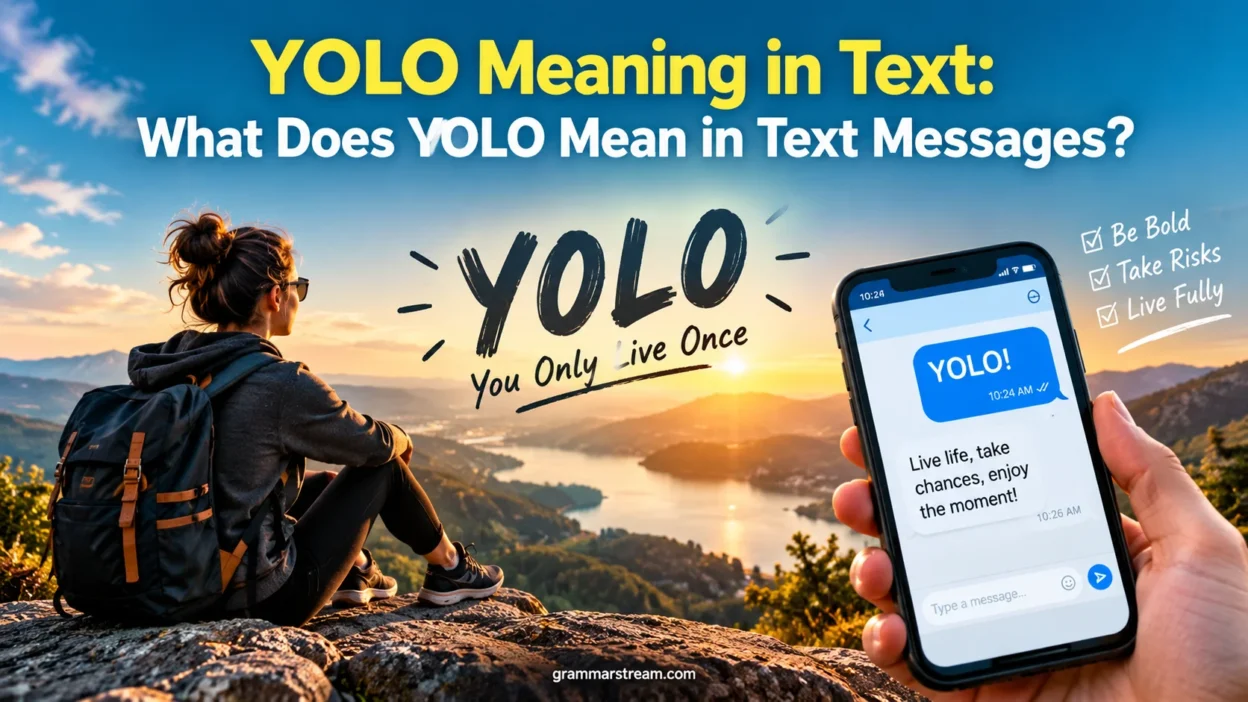
Have you ever received a message that simply says “YOLO” and wondered what the person really meant? You’re not alone. This short acronym appears in text messages, social media captions, comments, memes, and casual conversations. Although it contains only four letters, its meaning can change slightly depending on the situation.
YOLO stands for “You Only Live Once.” People usually use it when they want to express the idea of enjoying life, taking an opportunity, trying something different, or making a spontaneous decision. Sometimes it carries a serious message about living in the moment. Other times, it’s nothing more than a funny excuse for ordering an oversized dessert.
However, context matters. The same acronym can sound motivational, playful, sarcastic, or impulsive. Understanding the conversation around it helps you figure out what the sender actually intends.
Quick Answer
YOLO means “You Only Live Once.” In text messages, people use it to encourage taking a chance, enjoying an experience, trying something new, or making a spontaneous choice.
For example:
“I’m thinking about booking a last-minute trip. YOLO!”
Here, the person means that life is short and they want to enjoy the opportunity instead of overthinking it.
YOLO doesn’t necessarily mean “do something reckless.” It can refer to something as simple as eating your favorite meal, buying concert tickets, taking a weekend trip, asking someone out, or trying a new hobby.
The meaning can also be humorous:
“I ate the whole cake. YOLO 😂”
In this example, the person isn’t making a serious statement about life. They’re jokingly using YOLO to justify an indulgent decision.
Comparison Overview
YOLO is closely related to several expressions about enjoying life or taking opportunities. However, each phrase has its own tone and typical use.
| Expression | Meaning | Typical Tone | Common Use |
| YOLO | You Only Live Once | Casual, playful | Taking a chance or enjoying something |
| Carpe diem | Seize the day | Reflective, literary | Making the most of an opportunity |
| Go for it | Take the opportunity | Encouraging | Supporting someone’s decision |
| Live it up | Enjoy yourself fully | Casual, energetic | Parties, celebrations, vacations |
| Life is short | Time is limited | Reflective | Encouraging someone not to postpone life |
| Why not? | There’s little reason not to try | Casual | Supporting a spontaneous choice |
YOLO usually feels more informal than carpe diem. A person might use “carpe diem” in a thoughtful discussion about life, while “YOLO” fits naturally into a text conversation.
Main Differences Between YOLO Meaning in Text
The meaning of YOLO in text can shift based on the situation, tone, and relationship between the people communicating.
YOLO as Encouragement
One of the most common uses of YOLO is encouragement.
Someone might hesitate before doing something they’ve wanted to try. Their friend could respond with “YOLO” to push them toward action.
For example:
“I really want to audition for the school play, but I’m nervous.”
“YOLO. Just try it!”
Here, YOLO expresses encouragement rather than recklessness. The speaker is essentially saying that you won’t know what could happen unless you give the opportunity a chance.
YOLO as a Joke
YOLO also appears in humorous situations.
Someone doesn’t need to make a major life decision to use the acronym. In everyday texting, it can justify something completely ordinary.
“Should I get fries too?”
“YOLO.”
The joke comes from treating a small decision as if it were a once-in-a-lifetime event.
This is one reason YOLO works so well in casual conversations. It can make an ordinary choice sound dramatically important.
YOLO as a Way to Take a Chance
People sometimes use YOLO when they’re nervous about taking a reasonable risk.
For example:
“I’ve wanted to ask her out for months. YOLO.”
The person isn’t necessarily saying they don’t care about the consequences. Instead, they’re acknowledging that waiting forever won’t create new opportunities.
In this context, YOLO can mean “I’m going to stop hesitating and give this a shot.”
YOLO for Enjoying the Moment
Another common meaning focuses on enjoying the present.
Someone might use YOLO while traveling, attending a concert, celebrating a birthday, or spending time with friends.
For example:
“We stayed out until sunrise. YOLO!”
Here, the acronym highlights the experience rather than a serious decision.
The underlying message is simple: this moment matters, so enjoy it.
What Does YOLO Mean in Text Messages?
In texting, YOLO acts as a compact way to communicate an entire attitude.
Instead of writing:
“Life is short, so maybe you should take this opportunity and enjoy yourself.”
Someone can simply write:
“YOLO.”
That short response can carry a surprising amount of meaning because the other person already understands the context.
Texting relies heavily on shorthand. Acronyms such as LOL, OMG, BRB, IDK, and YOLO allow people to communicate quickly without spelling out every thought.
However, YOLO stands apart from many basic texting abbreviations because it communicates an idea or attitude, not just a phrase.
Common YOLO Text Examples
| Text Message | What YOLO Means |
| “Should I order the expensive steak? YOLO.” | Enjoy the meal despite the extra cost. |
| “I’m nervous about going alone, but YOLO.” | Take the opportunity despite hesitation. |
| “YOLO, let’s go on the road trip.” | Be spontaneous and enjoy the adventure. |
| “I bought the shoes. YOLO 😂” | Playfully justify an unnecessary purchase. |
| “Should I try sushi? YOLO.” | Encourage trying something new. |
The surrounding conversation usually provides the clues needed to understand the exact tone.
What Does YOLO Mean on Social Media?
On social media, YOLO often appears in captions, comments, memes, and short posts.
People may use it when sharing travel photos, exciting experiences, celebrations, food, shopping trips, or spontaneous activities.
For example, someone might post a picture from a last-minute vacation with the caption:
“Booked the flight yesterday. YOLO.”
The caption suggests spontaneity and excitement.
A person might also comment “YOLO!” under a friend’s post when the friend announces an unusual experience or bold decision.
YOLO in Social Media Captions
Common themes include:
- Travel
- Concerts
- Parties
- Food
- Shopping
- Adventure
- New experiences
- Spontaneous plans
- Celebrations
- Personal challenges
The acronym works particularly well in captions because it’s short and instantly recognizable.
YOLO Meaning in Dating and Relationships
YOLO can also appear when people talk about dating.
Someone might use it when deciding whether to ask another person out, attend a date, approach someone at an event, or give a relationship a chance.
For example:
“I’ve been thinking about asking him out.”
“Then do it. YOLO!”
In this context, YOLO means take the opportunity instead of letting fear stop you.
However, the acronym itself doesn’t reveal someone’s romantic intentions. If someone texts “YOLO,” you need to consider the rest of the conversation.
For instance, “YOLO, let’s get ice cream” has an entirely different meaning from “YOLO, I’m going to ask her out.”
Context does the heavy lifting.
YOLO Meaning at Work or School
YOLO is generally associated with casual communication, but you may still encounter it in school or workplace conversations.
A student might say:
“I signed up for the photography competition. YOLO.”
A coworker might joke:
“YOLO, I’m finally taking Friday off.”
These examples use YOLO informally. The speaker isn’t necessarily encouraging irresponsible behavior. Instead, they’re framing a decision as a chance to enjoy an opportunity.
Still, YOLO isn’t normally appropriate for formal reports, academic essays, business proposals, or professional documents unless you’re discussing the expression itself.
In formal writing, it’s usually better to express the underlying idea directly.
YOLO Tone and Meaning: How Context Changes It
One of the most important things to understand about YOLO meaning in text is that the acronym doesn’t have one fixed emotional tone.
The same four letters can sound completely different depending on the conversation.
YOLO as Motivation
A person might use YOLO to overcome hesitation.
“I’ve always wanted to learn guitar. YOLO.”
This suggests that the person wants to stop making excuses and finally try.
YOLO as Humor
The expression often becomes funny when the decision is trivial.
“I got extra cheese on my pizza. YOLO.”
Nobody believes extra cheese represents a profound life decision. The exaggeration creates the humor.
YOLO as Sarcasm
YOLO can also be sarcastic.
Imagine someone says:
“I stayed up ten extra minutes to finish the show. YOLO.”
The dramatic use of the acronym makes the situation sound much more significant than it really is.
Tone can become even clearer when emojis appear:
“YOLO 😂”
The laughing emoji strongly suggests a playful interpretation.
YOLO as an Impulsive Attitude
Sometimes YOLO genuinely refers to an impulsive choice.
A person might say:
“I wasn’t planning to go, but YOLO.”
That suggests they changed their plans spontaneously.
Still, YOLO itself doesn’t automatically mean reckless behavior. The actual action determines whether a decision carries serious risk.
Read More: Eiffel Tower Meaning Slang: What Does “Eiffel Tower” Mean in Text?
Why Do People Say YOLO?
YOLO became popular because it compresses a familiar idea into four memorable letters.
People use it for several reasons.
To Encourage Spontaneity
Life doesn’t always follow a carefully written schedule. Sometimes people want to do something simply because the opportunity has appeared.
YOLO gives that decision a playful label.
To Justify a Choice
The acronym can also work as a humorous excuse.
“I bought another pair of sneakers.”
“Why?”
“YOLO.”
The person probably knows the purchase wasn’t necessary. That’s part of the joke.
To Enjoy the Present
YOLO can express the idea that constantly postponing enjoyment isn’t always worthwhile.
A person might use it while traveling or celebrating a special event because they want to focus on the experience.
To Take a Reasonable Chance
YOLO can help someone move past excessive hesitation.
For example, applying for a job, entering a competition, attending an event, or asking someone on a date can feel intimidating.
In these situations, YOLO can represent a simple mindset:
Try it instead of wondering forever what might have happened.
YOLO vs. Carpe Diem
YOLO and carpe diem share a similar underlying idea, but they don’t sound the same.
Carpe diem is a Latin expression traditionally translated as “seize the day.” It has a long literary and philosophical history.
YOLO is much more modern and informal.
Compare these examples:
“This opportunity may not come again. Carpe diem.”
“This opportunity may not come again. YOLO!”
The first sounds reflective. The second sounds casual and conversational.
Both can communicate the value of acting in the present, but their cultural tone differs significantly.
YOLO vs. “You Only Live Once”
There is no major difference in basic meaning between YOLO and “You Only Live Once.”
YOLO is simply the abbreviated form.
People use the acronym because texting favors speed and brevity. A four-letter abbreviation can communicate an idea that would otherwise require a complete sentence.
For example:
“You only live once, so let’s go.”
can become:
“YOLO, let’s go.”
The shortened version sounds more casual and often more playful.
Is YOLO Still Used in Texting?
Yes, YOLO remains a recognizable expression in texting and online communication.
However, how often someone uses it can vary by age, social group, platform, and personal style. Internet slang doesn’t remain equally popular among every group forever.
Some people use YOLO sincerely. Others use it ironically because the expression became strongly associated with early-2010s internet and pop culture.
That distinction matters.
Someone writing:
“YOLO 😂”
may be using the phrase because they genuinely want to encourage spontaneity.
Another person may use it precisely because the phrase has a familiar, slightly nostalgic quality.
Both uses are possible.
Where Did YOLO Come From?
The idea behind “You Only Live Once” existed long before the modern acronym became popular.
People have expressed similar ideas for generations. The broader concept encourages people to recognize that life is limited and that opportunities shouldn’t always be postponed.
The acronym YOLO, however, became especially prominent in modern popular culture during the early 2010s.
YOLO and Drake’s “The Motto”
The acronym became widely associated with Canadian rapper Drake and his 2011 song “The Motto.”
The song helped push YOLO into mainstream youth culture and social media conversation.
Afterward, people began using the four-letter acronym across Twitter, Facebook, Instagram, text messages, memes, and everyday conversations.
Its popularity expanded far beyond music.
The important distinction is that Drake didn’t create the underlying phrase “You Only Live Once.” Similar wording existed before the acronym became a major piece of internet slang.
YOLO in Internet Culture
YOLO became particularly effective online because it was short, memorable, and easy to attach to almost any situation.
A photo of a vacation could get a YOLO caption.
A friend buying something expensive could receive a YOLO comment.
A person trying an unusual food could describe the experience with YOLO.
That flexibility helped turn the acronym into a cultural shorthand.
YOLO and Memes
Memes often use YOLO to exaggerate impulsive behavior.
For example, a meme might show someone making an obviously unnecessary purchase with a caption such as:
“Do I need it? No. YOLO.”
The humor comes from the mismatch between the seriousness of the phrase and the triviality of the decision.
That’s a recurring feature of YOLO humor.
Examples of YOLO in Text Messages
Here are several realistic examples showing how the meaning can change with context.
Example: Food
Person A: “Should I get dessert?”
Person B: “YOLO 😂”
Meaning: Go ahead and enjoy the dessert.
Example: Travel
Person A: “I found cheap flights for this weekend.”
Person B: “YOLO. Book them!”
Meaning: Take advantage of the opportunity.
Example: Dating
Person A: “I think I’m finally going to ask her out.”
Person B: “YOLO!”
Meaning: Take the chance instead of continuing to hesitate.
Example: Shopping
Person A: “I definitely don’t need another hoodie.”
Person B: “But you want it. YOLO.”
Meaning: Buy it if you really want it, expressed humorously.
Example: Trying Something New
Person A: “I’ve never tried Korean food before.”
Person B: “YOLO. Let’s go.”
Meaning: Be willing to experience something unfamiliar.
FAQs:
What does YOLO mean in text?
YOLO means “You Only Live Once.” In text messages, people usually use it to express spontaneity, encourage taking a chance, or justify enjoying an experience.
What does YOLO stand for?
YOLO stands for “You Only Live Once.” It is an acronym made from the first letters of the four words.
What does YOLO mean from a girl?
A girl using YOLO generally means the same thing as anyone else using it: “You Only Live Once.” Depending on the conversation, she could be expressing excitement, humor, spontaneity, or encouragement.
The acronym alone doesn’t establish romantic interest or any specific personal intention.
What does YOLO mean from a guy?
A guy using YOLO also generally means “You Only Live Once.” He might use it to encourage a friend, describe a spontaneous decision, or joke about something he’s doing.
The surrounding conversation determines the precise meaning.
Is YOLO a good thing or a bad thing?
YOLO itself isn’t inherently good or bad. It is an expression.
Someone can use it to describe a harmless decision such as trying new food. Someone else might use it to describe an impulsive choice with serious consequences.
The action and context matter more than the acronym.
Conclusion:
YOLO means “You Only Live Once,” and its meaning in text usually revolves around enjoying life, taking opportunities, trying something new, or making a spontaneous choice. The expression can be sincere, funny, sarcastic, or motivational. That’s why the surrounding conversation matters. A simple “YOLO 😂” after ordering dessert is probably a joke, while “YOLO, I’m going to ask her out” can express genuine encouragement and courage.