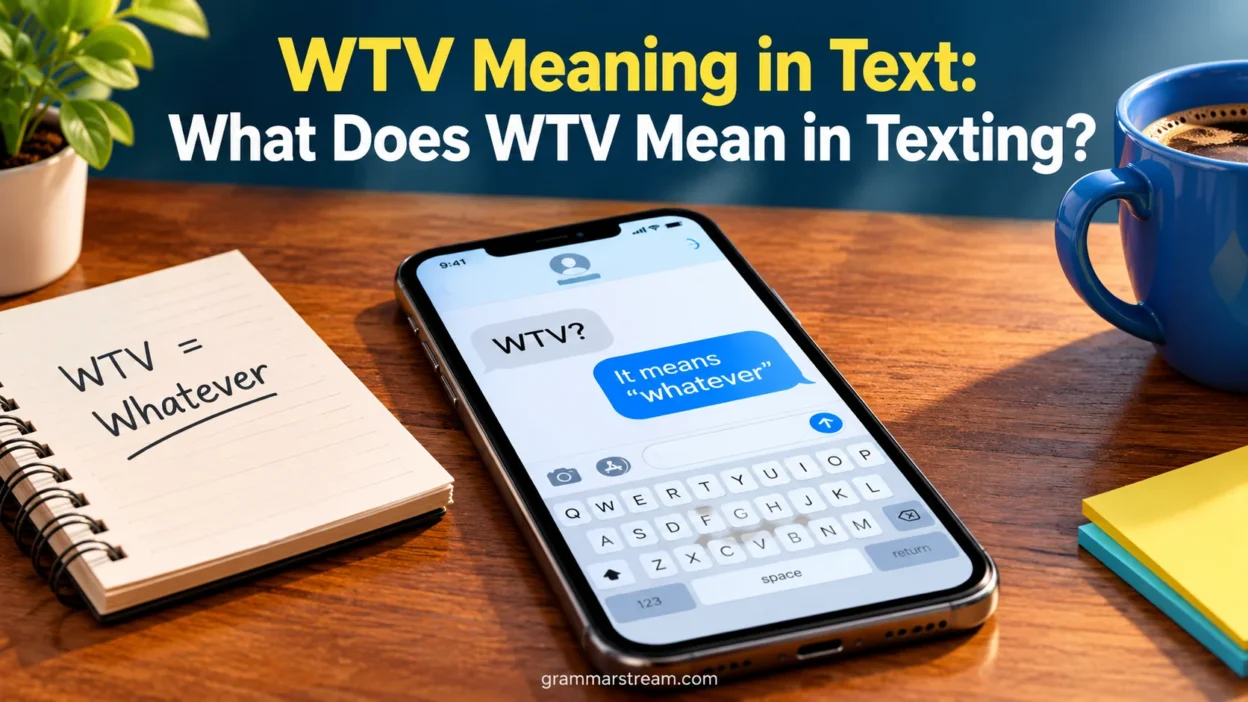
If someone sends you “WTV” in a text, you might wonder whether they’re being casual, annoyed, or simply saying they don’t mind. The good news is that the basic meaning is straightforward: WTV usually means “whatever.”
People use WTV in text messages, DMs, comments, gaming chats, and other casual online conversations. Depending on the situation, however, it can carry slightly different shades of meaning. It might mean “whatever you want,” “I don’t care,” “it doesn’t matter,” or “any option is fine.”
That difference matters because WTV isn’t a fixed emotional response. The words around it, punctuation, emojis, and the conversation itself can change how the message sounds.
For example, “WTV works for me” usually sounds relaxed. On the other hand, “WTV.” can come across as cold or dismissive. The abbreviation stays the same, but the tone changes.
Quick Answer
WTV means “whatever” in text messages and online conversations. It is an informal abbreviation that people use when they want to say “whatever,” “it doesn’t matter,” “I don’t care,” or “any option is fine,” depending on the context.
Here are the most common meanings of WTV in text:
- Whatever
- Whatever you want
- It doesn’t matter
- I don’t mind
- Any option is fine
- I don’t care
- Whatever happens
WTV is mainly used in casual communication. You might see it in texts, Snapchat messages, Instagram DMs, TikTok comments, gaming chats, or conversations between friends.
However, WTV doesn’t always sound neutral. A message such as “WTV works” can show flexibility, while “WTV, do what you want” may suggest frustration or indifference.
Comparison Overview
WTV is closely related to several other texting abbreviations, but these expressions don’t always mean exactly the same thing.
| Term | Meaning | Typical Use | Possible Tone |
| WTV | Whatever | Showing indifference or flexibility | Neutral, casual, dismissive |
| IDC | I don’t care | Saying something isn’t important to you | Indifferent or blunt |
| IDK | I don’t know | Showing uncertainty | Neutral |
| NVM | Never mind | Dropping a subject or correcting yourself | Casual, sometimes annoyed |
| IDGAF | I don’t give a f*** | Strong indifference | Very blunt or aggressive |
| TBH | To be honest | Introducing an honest opinion | Direct |
| IKR | I know, right? | Agreeing with someone | Friendly |
The key distinction is that WTV directly relates to “whatever.” Other abbreviations may communicate uncertainty, disagreement, indifference, or a change of subject.
For example, if someone asks, “Pizza or burgers?” and you reply “WTV,” you may mean either choice is fine. If you reply “IDC,” you’re more clearly saying that you don’t care about the choice.
Main Differences Between WTV Meaning in Text
The meaning of WTV in text can shift depending on the situation. Understanding those differences helps you interpret messages without automatically assuming the sender is being rude.
WTV Meaning “Whatever”
The most direct interpretation of WTV is simply “whatever.”
Someone may use it as a shorter version of the full word because texting encourages quick communication.
For example:
“WTV, I’ll see you later.”
Here, WTV works almost exactly like the spoken word “whatever.” The sender isn’t necessarily angry. They may simply want to move on from the topic.
Another example is:
“Choose WTV you want.”
In this case, WTV means “whatever” and gives the other person freedom to choose.
WTV Meaning “I Don’t Care”
WTV can also communicate “I don’t care.” This interpretation usually appears when the sender feels indifferent about a particular choice or outcome.
For example:
“Do you want to watch a movie or play a game?”
“WTV.”
The short response suggests that either option is acceptable, although the exact tone depends on the conversation.
This is where context becomes important. A person who says WTV after being asked about dinner may simply have no preference. A person who says WTV during an argument may sound much more dismissive.
WTV Meaning “It Doesn’t Matter”
Sometimes WTV means “it doesn’t matter.”
Consider this conversation:
“Should we meet at 6:00 or 6:30?”
“WTV works.”
Here, the sender probably means that either time works. They’re not necessarily saying that they don’t care about the person or the plan.
The difference may seem small, but it changes the emotional meaning. Indifference toward a choice isn’t necessarily indifference toward a person.
WTV Meaning “Any Choice Is Fine”
WTV can also communicate flexibility.
For example:
“Which restaurant should we try?”
“WTV you prefer.”
This means “whatever you prefer.” The sender is letting the other person make the decision.
In this situation, WTV can sound friendly and cooperative rather than dismissive.
What Does WTV Mean in Texting?
In everyday texting, WTV is a shortened form of “whatever.” People typically use it because casual digital conversations don’t require every word to be written in full.
Texting has produced many abbreviations such as LOL, IDK, BTW, TBH, and WTV. These shortcuts help people communicate quickly while keeping messages easy to understand.
WTV can appear at the beginning, middle, or end of a sentence.
Examples include:
- “WTV, I’m tired.”
- “Pick WTV you want.”
- “WTV works for me.”
- “I’ll eat WTV you’re having.”
- “WTV happens, happens.”
- “Do WTV you think is best.”
The abbreviation works best when the surrounding message makes its intended meaning clear.
WTV Meaning Depends on Context
A major reason people misunderstand WTV is that text doesn’t carry vocal tone.
When someone says “whatever” aloud, their facial expression, voice, and body language help you understand the intended emotion. Text removes most of those clues.
Compare these examples:
“WTV works for me 😊”
This sounds relaxed and flexible.
Now consider:
“WTV.”
That version can feel much colder.
Another example:
“WTV, do what you want.”
This may suggest frustration or irritation.
The abbreviation hasn’t changed. The context and delivery have changed.
Read More: FNF Meaning in Text: What Does FNF Mean in Text Messages?
WTV With Different Punctuation
Punctuation can influence how WTV feels.
| Message | Possible Impression |
| “WTV works for me.” | Neutral |
| “WTV!” | Casual or emphatic |
| “WTV?” | Confused or challenging |
| “WTV…” | Uninterested, tired, or dismissive |
| “WTV.” | Potentially cold or blunt |
| “WTV 😂” | Often playful or lighthearted |
These aren’t strict rules. People use punctuation differently, especially in fast-moving conversations.
Still, punctuation can provide useful clues when you’re trying to understand the sender’s tone.
Is WTV Rude in Texting?
WTV isn’t automatically rude. Its tone depends heavily on how someone uses it.
A friendly example might look like this:
“WTV you want is fine with me.”
The sender is giving you freedom to choose.
A potentially dismissive example looks different:
“WTV. I’m done talking about it.”
Here, WTV appears alongside language that clearly signals frustration.
The same principle applies to short responses. When someone answers only “WTV,” the message may feel blunt because it gives you very little emotional information.
When WTV Can Sound Rude
WTV may sound dismissive when:
- Someone uses it during an argument.
- The message contains a period and no additional explanation.
- The sender has already expressed frustration.
- The person uses it to shut down a conversation.
- The surrounding words suggest irritation.
- The recipient expects a more thoughtful response.
When WTV Sounds Neutral
WTV usually feels less harsh when:
- You’re discussing simple choices.
- The sender adds friendly language.
- The message includes an emoji that fits the conversation.
- Both people regularly use abbreviations.
- The sender explains what they mean.
For example:
“WTV works for me. You pick!”
That’s very different from:
“WTV.”
WTV Meaning on Social Media
The basic WTV meaning in text and social media usually remains “whatever.” There isn’t a completely different universal definition for each platform.
You may encounter WTV in:
- TikTok comments
- Instagram DMs
- Snapchat chats
- Facebook comments
- Discord conversations
- Gaming chats
- Group messages
- Online forums
People often use it when responding quickly or expressing indifference.
WTV Meaning on TikTok
On TikTok, WTV can appear in comments, direct messages, captions, or replies.
For example:
“WTV, let them talk 😂”
Here, WTV may communicate a casual “whatever” attitude.
TikTok’s fast-paced comment culture also encourages shortened language. However, WTV still depends on the specific sentence rather than having a special TikTok-only definition.
WTV Meaning on Instagram
Instagram users may use WTV in DMs and comments.
For example:
“WTV you wanna wear is fine.”
That usually means the other person doesn’t have a preference.
In a different conversation, however:
“WTV, I’m not arguing.”
could sound dismissive.
WTV Meaning on Snapchat
Snapchat conversations often use quick abbreviations because messages are usually short and informal.
Someone might say:
“WTV lol”
to brush off a minor issue.
The addition of “lol” can soften the message, although it doesn’t guarantee a friendly tone.
WTV Meaning on Facebook and Other Platforms
WTV can appear anywhere people communicate casually online. Facebook comments, Discord chats, gaming platforms, and group messages can all contain the abbreviation.
Its meaning generally stays connected to “whatever.”
WTV Meaning in Different Situations
The situation surrounding WTV often tells you more than the abbreviation itself.
When a Friend Sends WTV
If a friend sends “WTV,” don’t immediately assume they’re angry.
Look at what happened before the message.
If you asked:
“Pizza or tacos?”
and they replied:
“WTV.”
they probably mean either option works.
However, if you were arguing about something serious and they suddenly replied “WTV,” the same message could signal that they don’t want to continue the discussion.
When Someone Says “WTV You Want”
“WTV you want” usually means “whatever you want.”
For example:
“Which color should I get?”
“WTV you want.”
This can be genuinely accommodating.
However, the tone may change if someone says:
“Just get WTV you want.”
That version may sound irritated, especially after a long disagreement.
When Someone Replies Only “WTV”
A one-word response deserves more attention to context.
If the conversation was casual, the sender may simply have no preference.
If the conversation involved conflict, the response could signal that the person is tired of discussing the subject.
Rather than guessing, consider the messages immediately before it.
When Someone Writes “WTV 😂”
An emoji can soften the abbreviation.
For example:
“WTV 😂”
often feels more playful than:
“WTV.”
Still, emojis don’t have universal meanings. The relationship between the people and the overall conversation matter more than one symbol.
WTV Text Examples and Real-World Scenarios
The easiest way to understand WTV is to see how it behaves in different conversations.
Scenario: Choosing Food
Person A: “Pizza or Chinese?”
Person B: “WTV you want.”
Meaning: Person B is happy with either option.
Likely tone: Neutral and flexible.
Scenario: Ending an Argument
Person A: “You never listen to me.”
Person B: “WTV. I’m not arguing anymore.”
Meaning: The person wants to stop engaging with the argument.
Likely tone: Dismissive or frustrated.
Scenario: Choosing a Movie
Person A: “Comedy or action?”
Person B: “WTV works.”
Meaning: Either genre is acceptable.
Likely tone: Casual.
Scenario: Making Plans
Person A: “Do you want to meet Friday or Saturday?”
Person B: “WTV day works for me.”
Meaning: Either day is acceptable.
Likely tone: Cooperative.
Scenario: Brushing Off a Minor Problem
Person A: “Sorry, I forgot to bring it.”
Person B: “WTV lol.”
Meaning: It’s not a major problem.
Likely tone: Light and forgiving.
These examples show why translating WTV into one emotional meaning can be misleading.
WTV vs. Whatever
Although WTV and whatever share the same basic meaning, they don’t always create the same impression.
| Feature | WTV | Whatever |
| Type | Abbreviation | Full word |
| Formality | Very informal | More flexible |
| Common setting | Texts and social media | Speech and writing |
| Length | Short | Longer |
| Tone | Can feel blunt | More room for nuance |
| Formal writing | Generally unsuitable | Sometimes suitable |
The full word “whatever” can still sound dismissive. The difference isn’t simply about spelling.
For example:
“Whatever works for you.”
sounds fairly natural.
Meanwhile:
“WTV works for you.”
looks more like quick digital shorthand.
WTV vs. Similar Text Abbreviations
Several abbreviations can overlap with WTV, but they aren’t interchangeable.
WTV vs. IDC
WTV means “whatever.”
IDC means “I don’t care.”
They can communicate similar feelings in some situations, but they aren’t identical.
“WTV you choose is fine.”
focuses on the available choice.
“IDC what you choose.”
more directly expresses a lack of concern.
WTV vs. IDK
IDK means “I don’t know.”
These expressions serve completely different purposes.
“What should we eat?”
“WTV.”
means the person has no strong preference.
“What should we eat?”
“IDK.”
means the person doesn’t know what they want.
FAQs:
What does WTV mean in text?
WTV usually means “whatever.” Depending on context, it can also mean “I don’t care,” “it doesn’t matter,” or “any option is fine.”
What does WTV stand for?
WTV stands for “whatever.” It’s an informal abbreviation commonly used in texting and online conversations.
Is WTV slang?
Yes. WTV is commonly treated as informal internet or texting shorthand. It isn’t appropriate for most formal writing.
Is WTV rude?
Not necessarily. WTV can sound completely neutral when someone is expressing flexibility. However, a short response such as “WTV.” can sound dismissive depending on the conversation.
What does WTV mean on Snapchat?
On Snapchat, WTV generally means “whatever.” The abbreviation doesn’t have a separate universal Snapchat definition.
Conclusion:
The most common WTV meaning in text is simple: “whatever.” People use the abbreviation to communicate flexibility, indifference, or a lack of preference in casual digital conversations. Still, WTV doesn’t carry one fixed emotional tone. “WTV works for me” can sound perfectly relaxed, while “WTV.” might feel dismissive. The difference comes from context, punctuation, surrounding words, and the relationship between the people communicating.