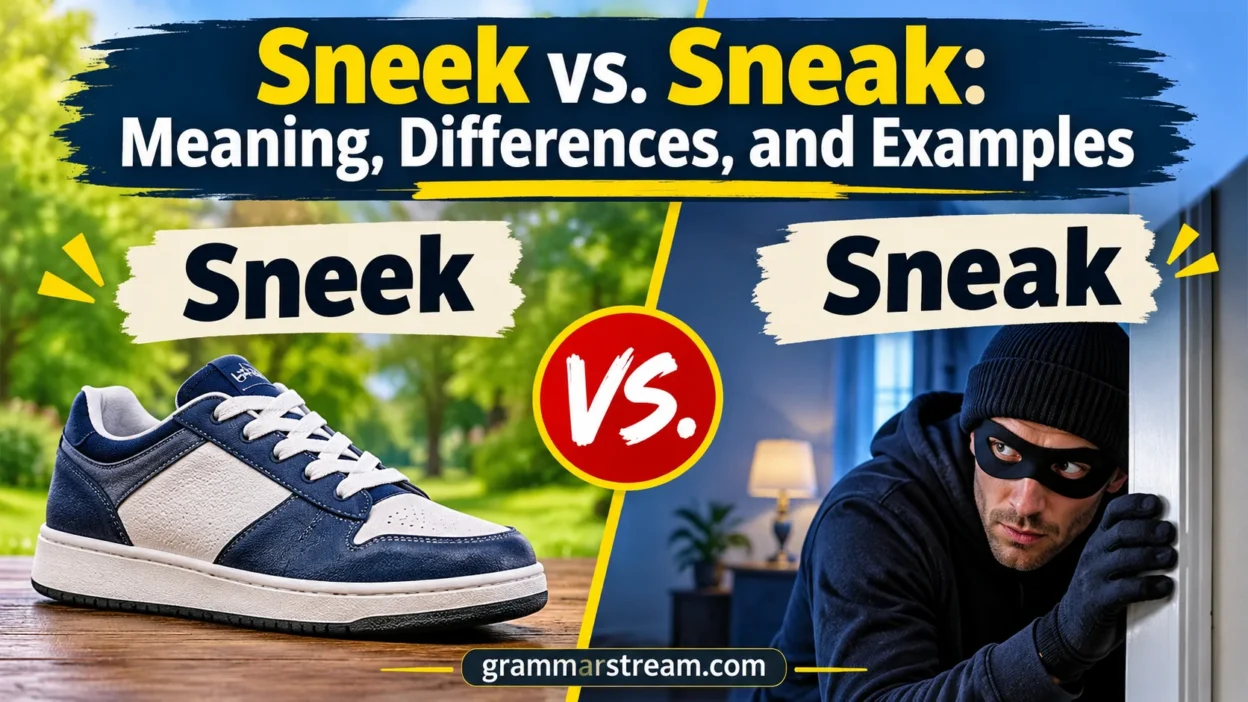
Have you ever wondered whether to write sneek or sneak? These two spellings look almost identical and sound the same when people intend to pronounce them. However, only one works as the standard English word for moving quietly or doing something secretly.
The confusion often comes from English spelling patterns. Words such as peek, seek, and speak use the letters EA or EE to represent similar vowel sounds. As a result, writers sometimes assume that sneek must also be correct.
However, English doesn’t always follow predictable spelling rules. The correct spelling is sneak, whether you describe someone entering a room quietly, taking something secretly, or avoiding attention. There’s one interesting exception worth knowing. Sneek is also the proper name of a city in the Netherlands. That geographical use doesn’t make it an alternative spelling of the English verb.
Quick Answer
Sneak is the correct standard English spelling when referring to moving quietly, secretly entering somewhere, or doing something without attracting attention. Sneek is not an accepted alternative spelling of this verb.
For example:
- Correct: The children tried to sneak into the kitchen.
- Incorrect: The children tried to sneek into the kitchen.
However, Sneek is a legitimate proper noun because it names a city in Friesland, Netherlands.
The easiest way to remember the difference is simple: use sneak for the English word and capitalize Sneek when referring to the Dutch city.
Comparison Overview
The following table highlights the important differences between sneek and sneak.
| Feature | Sneek | Sneak |
| Standard English spelling | No, not for the verb | Yes |
| Meaning | Proper geographical name | To move or act secretly |
| Part of speech | Proper noun | Verb and noun |
| Pronunciation | /sniːk/ for the city | /sniːk/ |
| Everyday usage | Place name | Common English vocabulary |
| Past tense | Not applicable | Sneaked or snuck |
| Present participle | Not applicable | Sneaking |
| Example | Sneek is in the Netherlands. | He tried to sneak outside. |
The biggest difference involves their purposes. Sneak functions as an everyday English word while Sneek identifies a specific geographical location.
Although their pronunciation is similar, their spelling and grammatical roles aren’t interchangeable.
Main Differences Between Sneek and Sneak
Although sneek and sneak look like possible spelling alternatives, they serve different purposes. One is a geographical name while the other is a standard English word with several grammatical uses.
Sneak: Meaning, Definition, and Usage
The word sneak describes moving, entering, leaving, or doing something secretly to avoid being noticed. It often suggests that someone wants to remain unnoticed or avoid attention.
People commonly use sneak when describing quiet movements, secret actions, or behavior intended to escape someone’s awareness.
As a verb, sneak describes the action itself.
Examples:
- The cat tried to sneak into the bedroom.
- Sarah decided to sneak out after everyone fell asleep.
- He managed to sneak a cookie before dinner.
- The students tried to sneak their phones into the classroom.
- Someone was trying to sneak past the security guard.
As a noun, sneak can describe a person who behaves secretly or dishonestly. Depending on the situation, it can sound critical or playful.
Examples:
- Don’t be such a sneak and tell everyone what happened.
- My little brother is a sneak when it comes to stealing snacks.
- Everyone suspected that the office sneak had shared the confidential information.
The exact meaning depends on context. Someone who sneaks into a room might simply want privacy. However, someone who secretly takes another person’s belongings behaves dishonestly.
Sneek: Meaning and Correct Usage
The spelling sneek isn’t a standard alternative to sneak in ordinary English writing. If you want to describe someone moving quietly or doing something secretly, you should write sneak.
For example:
- Incorrect: She tried to sneek out of the house.
- Correct: She tried to sneak out of the house.
Nevertheless, Sneek has a legitimate use as a proper noun. It refers to a city in the province of Friesland in the northern Netherlands.
The city is known for its canals, historic buildings, and the Waterpoort, a distinctive historic water gate. Its name begins with a capital letter because it identifies a particular place.
Consider these examples:
- We visited Sneek during our trip to the Netherlands.
- Sneek is a historic city in Friesland.
- The canals make Sneek an interesting destination for visitors.
Notice how the meaning changes with capitalization and context.
Important distinction: Writing sneek instead of sneak in an ordinary English sentence is a spelling mistake. Writing Sneek when referring to the Dutch city is correct.
Why Do People Confuse Sneek and Sneak?
English spelling contains many words that sound alike but use different letter combinations. That’s one reason writers sometimes confuse sneek with sneak.
The long E sound in sneak makes the spelling sneek look reasonable. After all, several familiar English words use EE to represent that sound.
Consider these examples:
| Word | Meaning |
| Sneak | To move or act secretly |
| Sneakily | In a secretive manner |
| Peek | To look quickly or secretly |
| Seek | To search for something |
| Speak | To communicate using words |
| Sleep | To rest with your eyes closed |
The words peek and seek contain EE. However, sneak and speak use EA.
This difference shows why spelling by sound alone can cause problems. English doesn’t use one consistent letter combination for every vowel sound.
A useful reminder: If you can write speak correctly, remember that sneak also uses EA.
Sneak Pronunciation and Spelling
The word sneak has one syllable and uses the long E vowel sound.
Its standard American English pronunciation is:
- IPA: /sniːk/
- Syllables: One
- Beginning sound: /sn/
- Vowel sound: Long E
- Ending sound: /k/
You can divide the word into three sound parts:
- Sn: The opening consonant combination.
- Ea: The vowel spelling representing the long E sound.
- K: The final consonant sound.
The combination EA doesn’t always produce the same pronunciation in English. For example, bread, break, and sneak contain the same two vowel letters but have different vowel sounds.
This is why learning the correct written form matters just as much as recognizing pronunciation.
Sneak as Different Parts of Speech
One interesting feature of sneak is that it works as both a noun and a verb. Its grammatical function depends on how you use it in a sentence.
Sneak as a verb
As a verb, sneak describes an action involving secrecy or quiet movement.
Examples:
- The dog tried to sneak upstairs.
- They sneak into the cinema without permission.
- I don’t want to sneak around behind my friends’ backs.
Sneak as a noun
As a noun, sneak describes someone who acts secretly or dishonestly.
Examples:
- He’s a little sneak who keeps taking my candy.
- Nobody trusts the office sneak.
- Stop being a sneak and tell me the truth.
The verb describes what someone does. The noun identifies the person who behaves that way.
Sneak Word Forms and Conjugations
Learning the different forms of sneak helps prevent additional spelling mistakes. Each form follows a recognizable grammatical pattern.
| Word Form | Part of Speech | Example |
| Sneak | Base verb | I sneak outside sometimes. |
| Sneaks | Third-person singular | He sneaks into the garden. |
| Sneaked | Past tense | She sneaked out yesterday. |
| Snuck | Alternative past tense | He snuck into the kitchen. |
| Sneaking | Present participle | They are sneaking upstairs. |
| Sneaky | Adjective | That was a sneaky move. |
| Sneakily | Adverb | She sneakily opened the door. |
Two forms deserve special attention: sneaked and snuck.
Both are accepted past-tense forms in modern English.
For example:
- She sneaked into the room.
- She snuck into the room.
Both sentences are grammatically correct. Snuck is especially common in informal American English while sneaked remains widely accepted in both American and British English.
However, don’t confuse either form with sneeked or sneeking. Those spellings aren’t standard forms of the verb.
Read More: Acception vs. Exception: Meaning, Differences, and Examples
Common Expressions and Phrases With Sneak
The word sneak appears in many everyday English expressions. These phrases describe secret movements, unexpected actions, and attempts to avoid attention.
Sneak Peek
Sneak peek means a preview or an early look at something before its official release or public presentation.
Businesses, entertainment companies, and content creators frequently use this expression when sharing upcoming products or announcements.
Examples:
- The company gave customers a sneak peek at its new phone.
- Here’s a sneak peek at our upcoming collection.
- The movie trailer offers a sneak peek at the storyline.
Remember that the correct expression is sneak peek, not sneek peek.
The word peek means to take a quick or secret look. Combining it with sneak creates the idea of seeing something before others get access.
Sneak Out
Sneak out means leaving a place quietly or secretly without attracting attention.
People often use this expression when someone wants to leave without disturbing others or asking permission.
Examples:
- The teenager tried to sneak out after midnight.
- We decided to sneak out before the meeting ended.
- He sneaked out of the office during lunch.
The expression can describe harmless situations or actions involving dishonesty. Context determines its meaning.
Sneak In
Sneak in means entering a place secretly or without being noticed.
Examples:
- The children tried to sneak in after bedtime.
- Someone managed to sneak a camera into the concert.
- I sneaked into the kitchen for another piece of cake.
You can also use this phrase figuratively when introducing something into a conversation or schedule.
For example: She managed to sneak in a quick question before the presentation ended.
Sneak Up On
Sneak up on describes approaching someone quietly or unexpectedly. It can also describe something happening gradually without someone noticing.
Examples:
- My brother tried to sneak up on me.
- The cat sneaked up on the sleeping dog.
- Winter always seems to sneak up on us.
The expression isn’t limited to physical movement. People also use it when describing unexpected deadlines, birthdays, or expenses.
Sneak Around
Sneak around means behaving secretly to avoid being discovered.
It often appears in conversations about hiding information, avoiding responsibility, or keeping activities private.
Examples:
- He doesn’t like sneaking around behind his parents’ backs.
- They were sneaking around the building after closing time.
- You shouldn’t have to sneak around to meet your friends.
This expression sometimes carries a negative meaning, especially when it involves dishonesty or broken trust.
Sneak Attack
A sneak attack is an unexpected attack that catches someone off guard.
The expression appears in military discussions, sports commentary, video games, and everyday conversations.
Examples:
- The team launched a sneak attack during the game.
- The enemy planned a sneak attack before sunrise.
- My brother gave me a sneak attack with a water balloon.
In casual conversation, the phrase can describe any surprising action rather than an actual physical attack.
Sneek vs. Sneak: Sentence Examples
Examples make spelling rules easier to understand. The following sentences show how sneak works in different situations.
Correct Sneak Examples
Here are ten examples showing the correct spelling and different grammatical forms.
- The cat tried to sneak into the bedroom without waking anyone.
- I wanted to sneak out before the rain started.
- He sneaked a cookie from the kitchen after dinner.
- The children snuck upstairs to watch television.
- Someone was sneaking around the backyard last night.
- She gave me a sneak peek at her new project.
- Don’t sneak into the office without permission.
- That little sneak took my favorite chocolate bar.
- The dog sneaks into my room whenever I leave the door open.
- He sneakily opened the package before his birthday.
Each example uses a standard spelling or grammatical form of sneak.
Incorrect Sneek Examples and Their Corrections
Writers sometimes use sneek because it appears to match the word’s pronunciation. However, these sentences require the standard spelling.
| Incorrect Sentence | Correct Sentence |
| He tried to sneek outside. | He tried to sneak outside. |
| Don’t sneek into my room. | Don’t sneak into my room. |
| She was sneeking around. | She was sneaking around. |
| I saw him sneeking out. | I saw him sneaking out. |
| They sneek into the building. | They sneak into the building. |
| He sneeked through the gate. | He sneaked through the gate. |
| Give me a sneek peek. | Give me a sneak peek. |
The corrections follow the standard spelling pattern:
- Sneak, not sneek.
- Sneaking, not sneeking.
- Sneaked, not sneeked.
- Sneak peek, not sneek peek.
Remember that snuck is another accepted past-tense form. You can use either snuck or sneaked depending on your preferred style.
Common Spelling Mistakes Related to Sneak
The confusion doesn’t stop with sneek and sneak. Several related expressions and word forms create similar spelling problems.
Understanding these differences will help you write more accurately.
Sneek vs. Sneak
This is the main spelling mistake discussed throughout this article.
Sneak is the standard spelling when referring to secretive movement or behavior. Sneek isn’t an accepted alternative spelling in standard English.
Examples:
- Correct: The boy tried to sneak into the garden.
- Incorrect: The boy tried to sneek into the garden.
Sneek Peek vs. Sneak Peek
The expression sneak peek means an early preview of something.
People often misspell it as sneek peek because both words contain similar vowel sounds.
Examples:
- Correct: The designer shared a sneak peek of the new website.
- Incorrect: The designer shared a sneek peek of the new website.
Remember that peek and sneak are different words with different spellings.
Sneeking vs. Sneaking
When adding the -ing ending to sneak, you simply add the suffix without changing the original spelling.
The correct form is sneaking.
Examples:
- Correct: The children are sneaking downstairs.
- Incorrect: The children are sneeking downstairs.
The same spelling rule applies to other sentences involving continuous actions.
Sneaked vs. Snuck
Unlike sneek and sneak, these two forms are both correct.
- Sneaked: The traditional regular past-tense form.
- Snuck: An established irregular past-tense form.
Examples:
- He sneaked into the classroom.
- He snuck into the classroom.
Both sentences communicate the same basic action. In American English, snuck is particularly common in everyday conversation.
Frequently Asked Questions
Is Sneek or Sneak the Correct Spelling?
Sneak is the correct standard English spelling when describing secretive movement or behavior. Sneek isn’t an accepted alternative spelling of the verb. However, Sneek is a proper geographical name for a city in the Netherlands.
Is Sneek a Real Word?
Yes, Sneek is a real proper noun. It identifies a city in Friesland, Netherlands. However, it isn’t the standard spelling of the English verb sneak. Always consider the context before deciding which spelling to use.
Why Do People Spell Sneak as Sneek?
People often confuse these spellings because sneak contains a long E sound. Other familiar words, including peek and seek, use EE to represent a similar sound. This makes sneek look reasonable even though it isn’t the standard spelling.
What Does Sneak Mean in English?
Sneak means to move, enter, leave, or act secretly without attracting attention. It can also function as a noun describing someone who behaves secretly or dishonestly. For example, someone might sneak into a room or call another person a little sneak.
Is It Sneek Peek or Sneak Peek?
Sneak peek is the correct expression. It describes an early preview or an opportunity to see something before its official release. The spelling sneek peek is incorrect in standard English.
Are Sneaked and Snuck Both Correct?
Yes, both sneaked and snuck are accepted past-tense forms of sneak. For example, you can write either “She sneaked outside” or “She snuck outside.” Both sentences are grammatically correct.
Is Sneak Used in Both American and British English?
Yes, sneak is used in both American and British English. The spelling remains the same in both varieties. However, snuck is particularly common in informal American English while sneaked is also widely used.
What Is the Difference Between Sneak and Sneaking?
Sneak is the base form of the verb while sneaking is its present participle. Use sneak in sentences such as “I sneak outside.” Use sneaking in sentences such as “I am sneaking outside.”
Conclusion:
The difference between sneek vs. sneak becomes simple once you understand their meanings and proper uses. Sneak is the correct standard English spelling for moving quietly, entering secretly, or doing something without attracting attention. It works as both a noun and a verb and has several related forms, including sneaks, sneaked, snuck, and sneaking. On the other hand, sneek isn’t an accepted alternative spelling of this English word. Its legitimate use is as a proper noun, particularly the name of a city in the Netherlands.